Heuristic Trap: Commitment
An article for the Winter 2026 edition of the PRANZ newsletter. This is the first of a six part series on heuristic traps or mental shortcuts. These can sometime lead us into dangerous situations. They are the situations that leave you wondering “how did I get here” and afterwards the decision seems so silly and avoidable.

When “We’ve Come This Far” Becomes Dangerous
We like to think our decisions in the outdoors are rational. But often, without realising it, we’re guided by mental shortcuts — heuristics — that help us make quick choices. Most of the time they’re useful. In the backcountry, they can quietly steer us toward trouble. One of the most common traps for packrafters is Commitment, also known as goal‐oriented thinking. It’s the voice that says “We’ve planned this for months,” or “We’ve come too far to turn back now.”
Commitment is great when you’re training for a marathon. It’s far less helpful when the river is rising, the weather is turning, or your gut feeling is that something isn’t right.
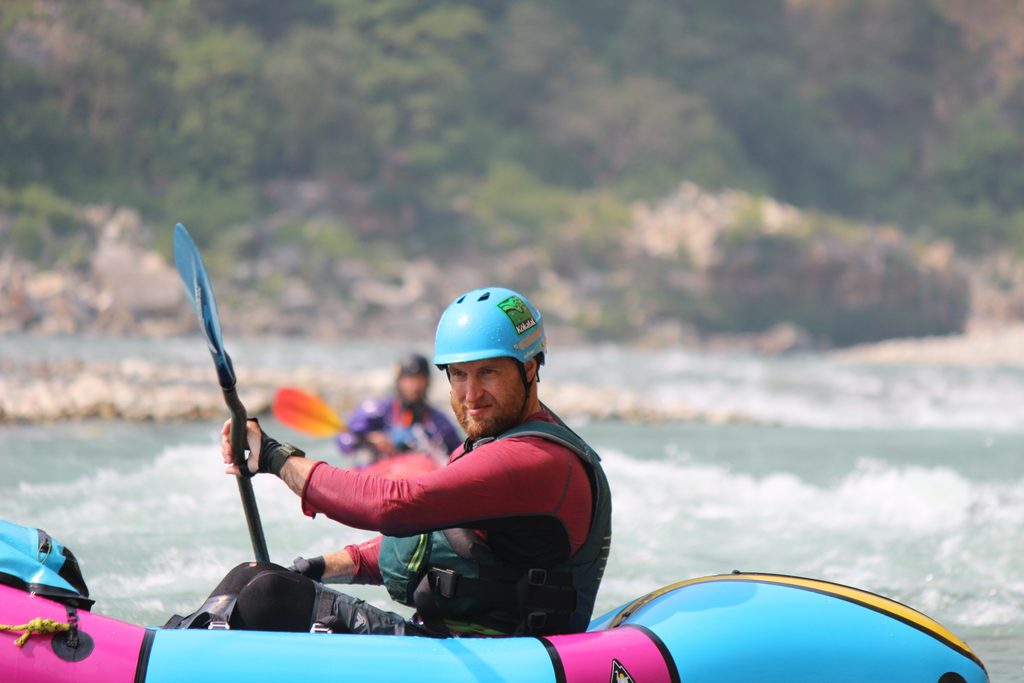
Tom on a committing trip on the Mahakhali River, Nepal.
Photo: David Stephenson
To see how easily this trap forms, let’s follow a scenario.
*This is a fictional story, although based on real situations that have occurred in New
Zealand. The characters are entirely fictional.
A Packrafting Story: When the Goal Takes Over
Jim* had been dreaming of the Karamea for a year. The right crew, a long weekend, and a
good flow had finally lined up. By Friday evening, Jim and his teammates, Ben* and Sarah*,
were buzzing as they loaded boats and bags into the truck and started the long drive west.
Overnight, rain hammered the tent. The morning sky was low and brooding. The flow gauge
had leapt from a friendly 50 m3/s to an angry 110 m3/s.
The team debated the mission. Five flat whites later, they convinced themselves the river
would drop. After all, they’d driven seven hours. They weren’t about to turn around now.
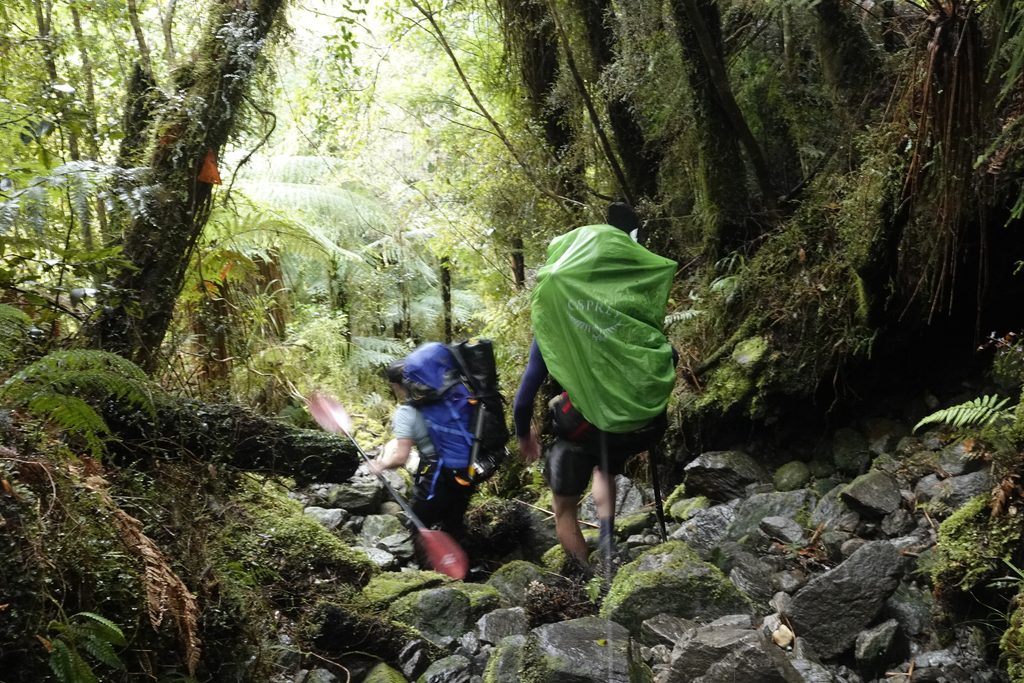
The walk in was wet but cheerful. When they reached the river, it was high and fast — but clear. According to Packraftingtrips.nz, the first day was the easy part, and apart from
portaging a couple of larger rapids, the team enjoyed a fast, scenic trip down the Upper Karamea.
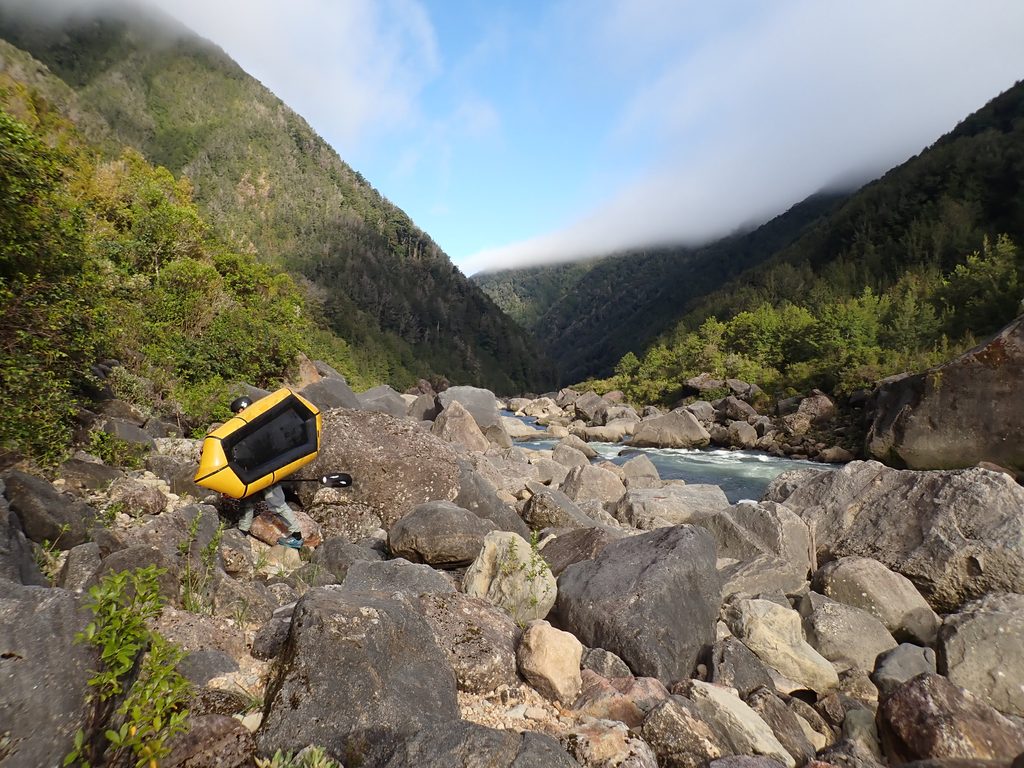
The next morning, they paddled across the pristine earthquake lakes. They heard the distant rumbling half a kilometre before the end of the lake. One look at Roaring Lion Rapid confirmed the obvious: this was a portage.
The trio hauled their boats over boulders the size of cars, sweating and slipping through the biblical landscape. When they put back on, an hour and a half later, they were tired but relieved to be paddling again.
Portaging the Roaring lion Rapid – its a big job! Portage model: Nick Ozard, Photo: Tom waters
The river felt different. The character had changed: steeper, faster, more powerful. Jim felt himself getting pushed around. He was reacting instead of paddling with intention. He thought about walking out. But then the trap snapped shut: “I don’t want the others to think I’m bailing on our dream. I came all this way to paddle the Karamea!”
They regrouped in an eddy.
“Pretty rowdy aye?” Jim said, trying to sound braver than he felt. “Yeah! We’re doing it!” Ben replied, hoping the others didn’t notice how tightly he was gripping his paddle. Sarah stayed quiet, eyes fixed downstream.
Jim tried some mental skills. “Winners don’t quit,” he told himself. With that, he pointed the nose of the packraft into the current and gasped as it whipped him downstream. Minutes later, the team dropped into the rapid aptly known as “Holy sh*t!” Jim felt the river steepen. His survival paddling kicked into overdrive. He dodged a buffer wave off a massive rock — then saw he was heading straight for an enormous surging hole.
The gnawing mouth of the hole swallowed him and he was thrown violently from the raft. The
churning water folded over him, dragging him deep into the green room. The light slowly
brightened until, with bursting lungs, he broke the surface.
He looked upstream just in time to see Ben vanish into the same hole. Sarah watched in
horror as two packrafts — and her friends — vanished downstream.
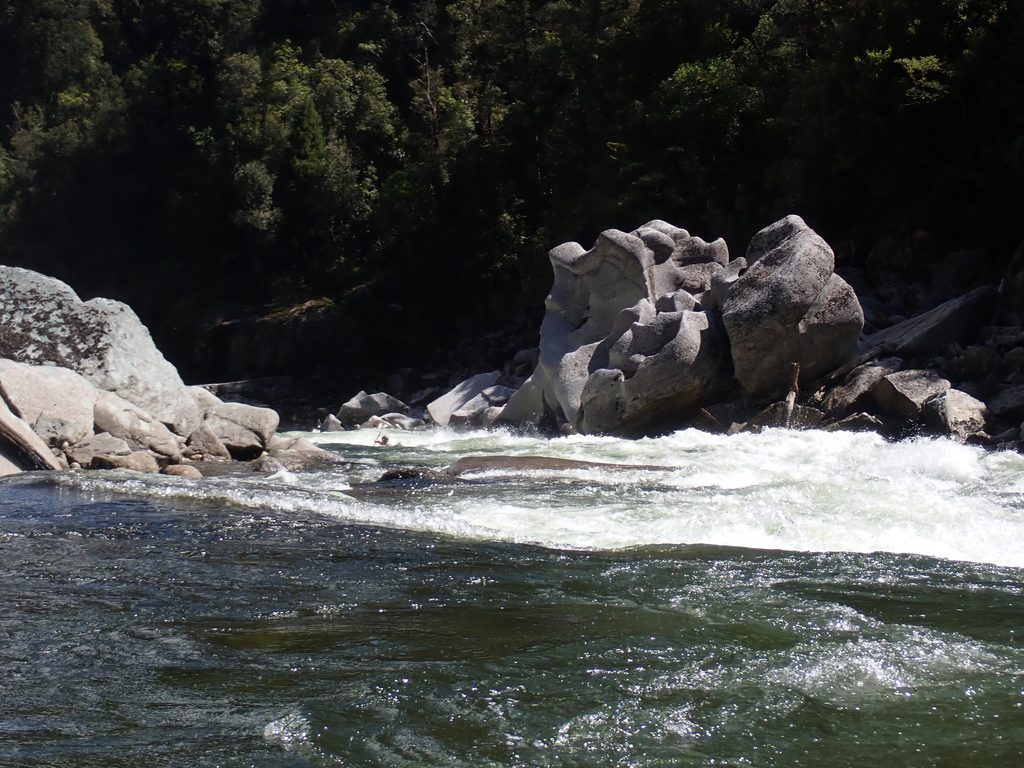
Nick Ozard is dwarfed by the size of the features on the Karamea river. Photo: Tom Waters
Outcome
This scenario could end in many ways — a frightening swim, a lost boat, or something far worse. But the real failure didn’t happen in the rapid itself. It happened long before the swim, in the small decisions shaped by commitment.
Most paddlers won’t have such a scary swim on the Karamea. But almost every paddler will face a moment where commitment speaks louder than caution. The real question is whether you’ll recognise that moment when it arrives.
This isn’t about avoiding hard rivers or refusing to push your limits. It’s about making sure that when you do push, it’s a deliberate choice — not something you slide into because you missed the signs that the situation had changed.
The issue wasn’t that the team lacked the skills to paddle the Karamea at normal flows — they did. The problem was failing to recognise how the conditions had shifted. And when the incident finally occurred, they didn’t have the necessary skills or energy to perform an effective rescue.
So how was this a commitment trap?
The team invested heavily before the danger appeared
● A year of planning
● A long drive
● A rare alignment of crew, weather window, and time off
● A tough walk in
● A successful first day on the river
These are classic sunk costs that feed commitment.
There were multiple red flags
● Overnight rain
● Flow doubling
● A river running higher than expected
● A massive, exhausting portage
● Paddlers startled by the sudden change in river character
These are exactly the conditions where commitment overrides judgment.
How to Avoid the Commitment Trap
Commitment blinds us to changing conditions. The antidote is pre‐planned decision points — moments where you deliberately pause, step back, and reassess.
Build decision points into your trip plan
Examples:
● “At the put‐in, we’ll reassess flow, weather, and energy levels before committing.”
● “At the stream junction, we’ll decide whether to continue with the primary plan or switch to Plan B.”
These checkpoints force you to evaluate the situation you’re actually in, not the one you hoped for. In the Karamea scenario, there was a decision point before starting the walk. There should have been another before putting on the river on Day 1, and a major one after finishing the Roaring Lion portage.
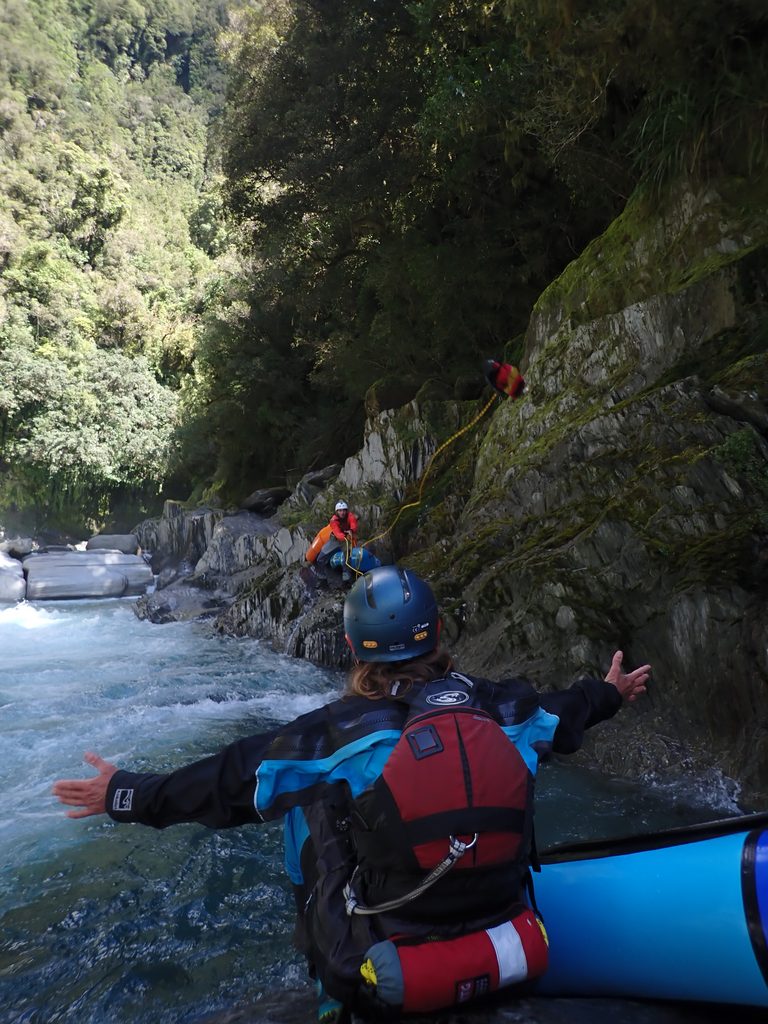
Rope!
Prioritise safety as an objective. Kelly O’Hagen receiving a throw while portaging. Toaroha river.
Photo: Tom Waters
Treat the put‐in as a major decision
Once you’re on the river, options shrink. Before unpacking:
● Check flow and weather
● Assess team energy
● Revisit your turnaround criteria
If the river isn’t what you expected, the safest decision may be to walk out — even if it feels like a waste.
Treat the put‐in as a major decision
Once you’re on the river, options shrink. Before unpacking:
● Check flow and weather
● Assess team energy
● Revisit your turnaround criteria
If the river isn’t what you expected, the safest decision may be to walk out — even if it feels
like a waste.
Recognise sunk‐cost thinking
A classic example: You’ve walked two hours to a river that “needed a bit of rain.” It’s now too high. The temptation is to say, “I didn’t carry all this gear for nothing.” But the river doesn’t care how far you walked. It only cares about physics.
Prioritise safety over the objective
Another scenario: A team on the Hollyford–Pyke wakes to howling winds and whitecaps on Lake McKerrow.They’re short on time and desperate to complete the loop. The goal becomes the driver — not the conditions. Safer options exist:
● Turn back
● Wait a day and shorten the trip
● Explore side valleys instead
But commitment says, “If you don’t paddle, you won’t complete the loop.” and “we’ll lose our hut bookings”
The Takeaway
Commitment is powerful — it gets us out the door, keeps us training, and helps us push through challenges. But on the river, it can cloud judgment and narrow our options.
The best paddlers aren’t the ones who push through no matter what. They’re the ones who recognise when the plan no longer fits the conditions — and change
plans.
If you want to dive deeper into heuristic traps, Wilderness Magazine and the New Zealand Mountain Safety Council have an excellent series exploring how trampers and paddlers can recognise and avoid them.
Wilderness Magazine: Avoiding over commitment
Mountain safety Council: Mental shortcuts
Clock in next issue where I talk about another heuristic trap – Familiarity.
By Tom Waters