The most important safety skill
An article for the Summer 2025 edition of the PRANZ newsletter. This one covers a vital but often unrecognised safety skill.

What is the most important safety skill? Think quickly, and without reading ahead, I want you decide on an answer of the one single most important safety skill a paddler could have.
Got it?
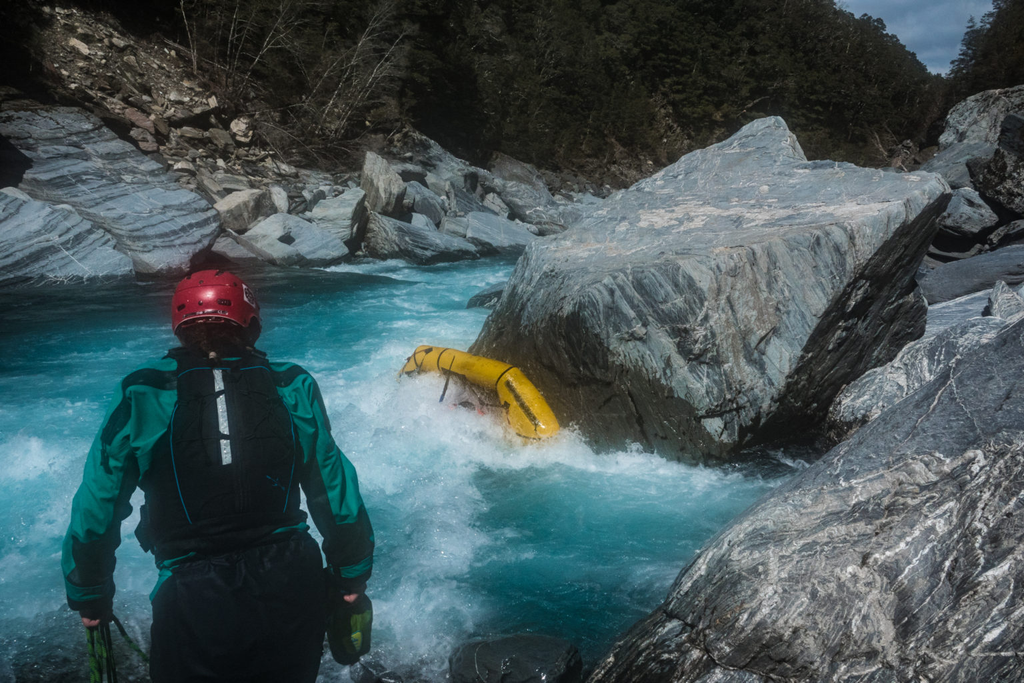
Sandra Hyslop poised to deploy a throw rope to Nick Ozard. Landsborough River, South Westland.
Image: Tom waters
No doubt some of you will have answered self-rescue, buddy rescue, or swift water swimming. You are close. While these are vitally important skills to have in your quiver there is an overarching skill that ties all those in together. This skill is situational awareness.
So what is situational awareness exactly?
It is having an understanding of what is happening around you. In order to utilise any of the other rescue skills, first you have to know that a situation is occurring. It sounds like a given, but you would be surprised how often it is overlooked or neglected.
Now I hear you scoffing, that looking around occasionally doesn’t really sound like a skill. Well I’m here to tell you that it is – and it’s often not done well. I have been on multiple trips where other paddlers are focused on the scenery, catching waves or just surviving the next rapid. As a result they pay little attention to the team.
The most exposed I have felt on the river is when I joined an established group for a paddle. I ended up at the back (playing) and the group started moving faster. Then, unable to catch up, we paddled for over an hour without anyone deliberately looking back to check if I was still there. I didn’t paddle with that group again.
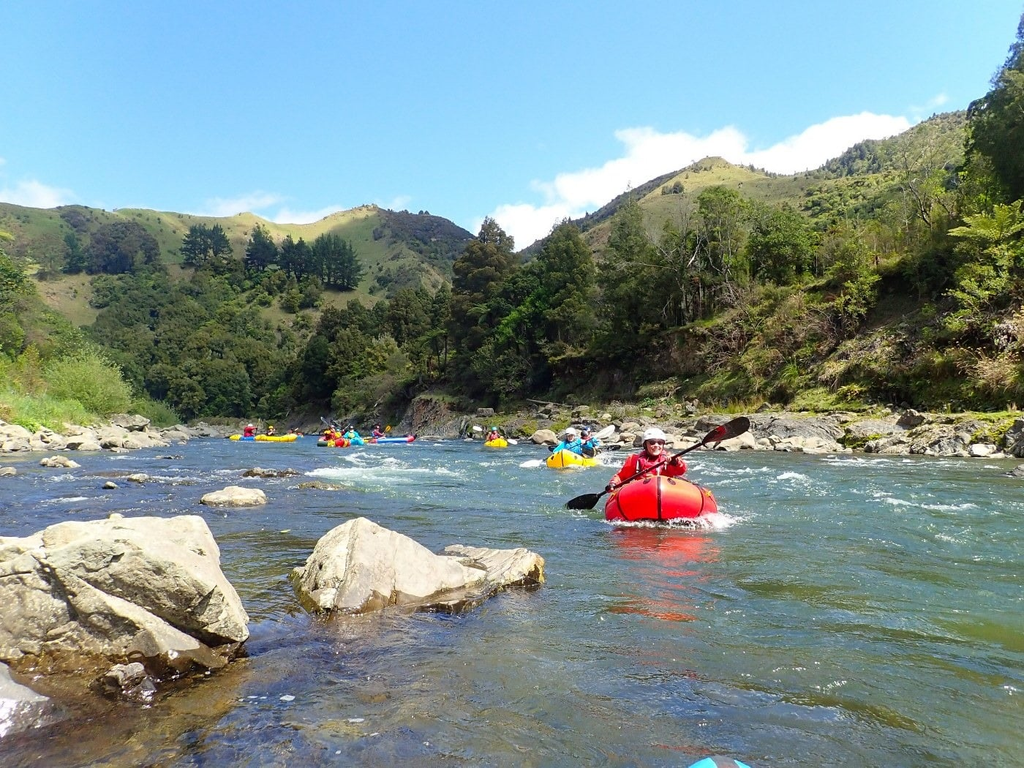
Packrafters in a large group – Who is making sure no one is missing?
Having good and consistent situational awareness means you are more likely to avoid rescue situations, react faster and more accurately when it does occur. This is important because unlike some other outdoor sports, accidents in water can happen quickly, silently and have fatal consequences. A simple mistake could lead to being pinned against a rock, getting caught on some wood in the current (strainer) or simply swimming. In open water this could be capsizing and the wind taking the paddlers boat. In each of these scenarios the situation has gone from normal, to threatening within ten seconds. It could develop to be life threatening within the next minute if action is not taken. The victim may not call out as he or she will be trying to rescue him or herself, with their mouth close to the waterline. Checking on your mates means the situation is much more likely to be observed early, alarm raised and rescue can begin.
There is an adage that the fence at the top of the cliff is better than the ambulance at the bottom. Situational awareness is seeing the cliff and is better than both of these things. Identifying hazards early, getting into an eddy above a larger rapid, recognising the symptoms of hypothermia are all things that allow you to avoid safety risk events happening in the first place.
So I have covered the what, and the why. Let’s talk about how one maintains situational awareness. The easiest way is simple. Look around you. Keep your head on a swivel, take the effort to check all your teammates are still upright in their boats and paddling. I try to check in every 15 -30 seconds.
On slow water or gentle rapids this is easy, however it is more important on harder rapids. If you are the first paddler you will have to develop the skill of stealing a few hurried glances over your shoulder as you rampage down the rapid. A few split seconds of looking rearward should be enough to confirm that the paddler behind you is upright and still making their paddle move in vaguely paddle-like motions.
Between rapids count the group members and make sure everyone is there. In a group larger than five it is surprisingly easy to not realise someone is missing. Did that person stop to blow up their boat or are they clinging to a strainer? The least amount of time that has passed between the incident and the group stopping to wait, the less chance of the separation developing into something serious.
Catch strategic eddys. Grab an eddy half way down a rapid, check everyone is safe before you carry on. Wait at the bottom of harder rapids. It’s fun, it looks cool and you are keeping the group safe. Why would you not?
The last tool you can use is talking to your team. Ask questions like, “how are you doing for temperature?”, “When did you last eat?”, and even “how are you enjoying the paddling today?”
Use this tool to monitor the energy levels, warmth, and mental state of your team. This is even more important following an incident.
The main benefit of this is avoiding death. Which is honestly always a positive on a trip. But more widely it means you will be trusted, and therefore more likely to be invited on cool trips. Hard skills can be developed, but the right attitude is more difficult. I would rather paddle with someone who is switched on and needs some guidance than someone super skilled but doesn’t pay attention.
In summary, maintaining situational awareness is the skill of knowing what is going on around you.
It helps to:
- Prevent situations from occurring, and
- Allows swift intervention.
You can improve your awareness by:
- Checking on your teammates,
- Catching eddys,
- Counting the group members,
- Monitoring the team, and
- Checking the map.
Developing this skill means you are trusted as a team member and get invited on more trips.